
What Are the 4 Intents of SEO? (Search Intent Explained)
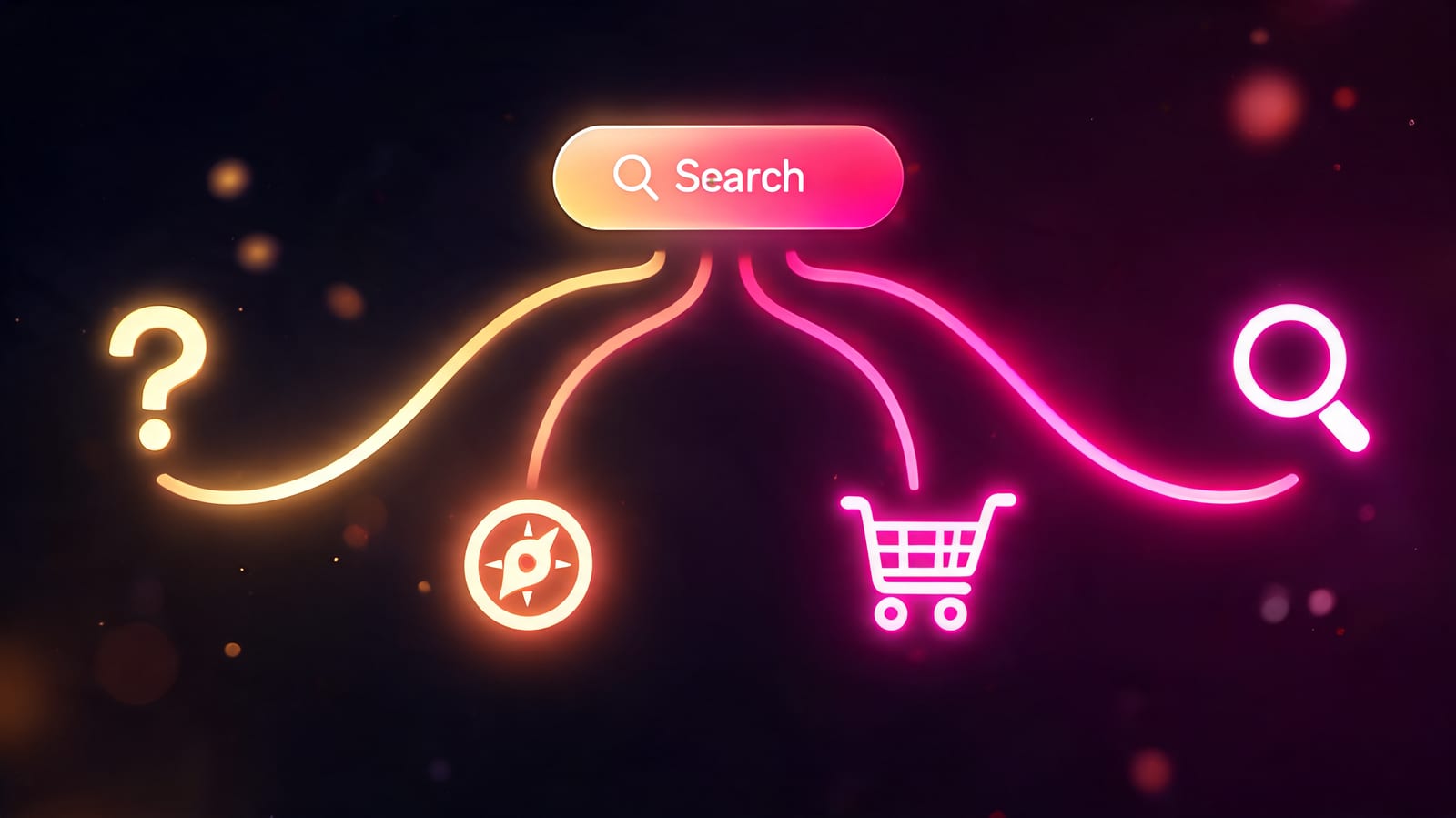
The 4 intents of SEO are informational, navigational, commercial, and transactional — the four reasons behind any search. Informational means the searcher wants to learn something. Navigational means they're looking for a specific site. Commercial means they're researching before a purchase. Transactional means they're ready to act or buy. Every keyword carries one of these intents, and matching your page to the right one is often the single biggest factor in whether it ranks — because Google's entire job is to serve the result that fits what the searcher actually wanted.
Get the intent wrong and even a well-written, well-linked page will struggle, because it's answering a question nobody asked. Get it right and you're already halfway to page one. Here's each intent, how to recognize it, and what content it demands.
Intent 1: Informational — "I want to learn"
Informational searches are people looking for knowledge, not a product. This is the largest category by volume — most of what people type into Google is a question or a topic they want explained.
Signals: words like what, how, why, guide, tutorial, examples, ideas, tips. Queries like "what are the 4 intents of SEO" or "how do backlinks work" are purely informational.
What to serve: genuinely useful, well-structured content that answers the question fully — guides, explainers, how-tos. Don't try to sell here; the searcher isn't buying yet. This is where you build trust and become the source someone remembers when they are ready to buy. Most of the resource pages you're reading right now target informational intent.
Intent 2: Navigational — "take me to a specific place"
Navigational searches are people trying to reach a particular site or page they already have in mind. They know where they want to go and are using Google as a shortcut.
Signals: a brand name, product name, or site name in the query — "Backlinkster login," "Google Search Console," "Ahrefs pricing."
What to serve: if it's your brand, make sure your own pages (homepage, login, key product pages) rank cleanly for your name. You generally can't win navigational searches for other brands, and it's rarely worth trying — someone searching "Ahrefs login" wants Ahrefs, not you. The one exception is comparison content ("[Brand] alternative"), which straddles navigational and commercial intent.
Intent 3: Commercial — "I'm researching before I buy"
Commercial-investigation searches sit between learning and buying. The searcher intends to purchase eventually but is still comparing options, reading reviews, and weighing choices. This is high-value intent because these people are close to converting.
Signals: best, top, review, comparison, vs, alternative — "best SEO tools for beginners," "Backlinkster vs buying backlinks," "cheapest link building service."
What to serve: comparison pages, "best of" roundups, reviews, and honest breakdowns that help the searcher decide. A page like which backlink is best targets commercial intent — it helps someone evaluate options rather than just explaining a concept. Content here should be genuinely helpful and balanced; readers can smell a thinly disguised sales pitch and so, increasingly, can Google.
Intent 4: Transactional — "I'm ready to act"
Transactional searches are people ready to do the thing — buy, sign up, download, subscribe. They've decided; now they want to complete the action. Volume is lower than informational, but conversion intent is the highest of all four.
Signals: buy, price, sign up, download, get, free trial, discount, near me — "sign up for a backlink exchange," "buy domain authority checker," "free backlink tool."
What to serve: optimized product, pricing, and signup pages — fast, clear, and frictionless. The content job here isn't to educate; it's to remove doubt and make the next step obvious. If someone searches "free link exchange platform," they want a page that lets them start, not a 2,000-word essay.
Why matching intent beats almost everything else
Here's the part that trips up most site owners: you can do everything else right and still fail on intent. Imagine you write a brilliant, deeply researched guide and target the keyword "buy backlinks." You'll lose — because everyone searching that phrase wants a place to buy, not a guide to read. Google sees that its users bounce from your page back to the results, and it stops ranking you.
The fix is to look at what already ranks for your target keyword before you write. Search it and read the top results:
- Mostly guides and how-tos? → informational intent. Write a guide.
- Mostly product or category pages? → transactional. Build a product page.
- Mostly "best of" lists and comparisons? → commercial. Make a comparison.
The current page-one results are Google telling you what intent it has assigned to that query. Match it, and you're competing on the right field. Fight it, and you've lost before you start. This is also why intent is the deciding factor at the ranking stage of SEO — relevance to intent is what Google is really measuring.
How intent shapes your whole content strategy
Smart SEO maps content to a journey across the four intents. Someone might find you through an informational post, return via a commercial comparison, and finally convert on a transactional page. Covering all four for your topic builds a funnel: you attract people while they're learning, stay useful while they're comparing, and are the obvious choice when they're ready.
Backlinks amplify every stage of that funnel. A page can be perfectly intent-matched and still stall if it lacks authority — because when several pages all nail the intent, the one with the stronger backlink profile wins. Backlinkster helps close that gap by matching you with real site owners to trade verified, in-content backlinks 1-for-1, so your intent-matched pages have the authority to actually rank. The free tier is five swaps a month.
The takeaway
The 4 intents of SEO — informational, navigational, commercial, and transactional — are the four reasons anyone searches. Every keyword carries one, and matching your content to it is the highest-leverage decision you make before writing a single word. Check what already ranks, identify the intent it represents, and build the page that fits. Intent-matched content plus real authority is the combination that wins — miss the intent, and nothing else can save the page.
Related: The three stages of SEO · Which backlink is best? · The three main areas of SEO