
Which Jobs Will Survive AI? (And What It Means If You Work in Marketing)
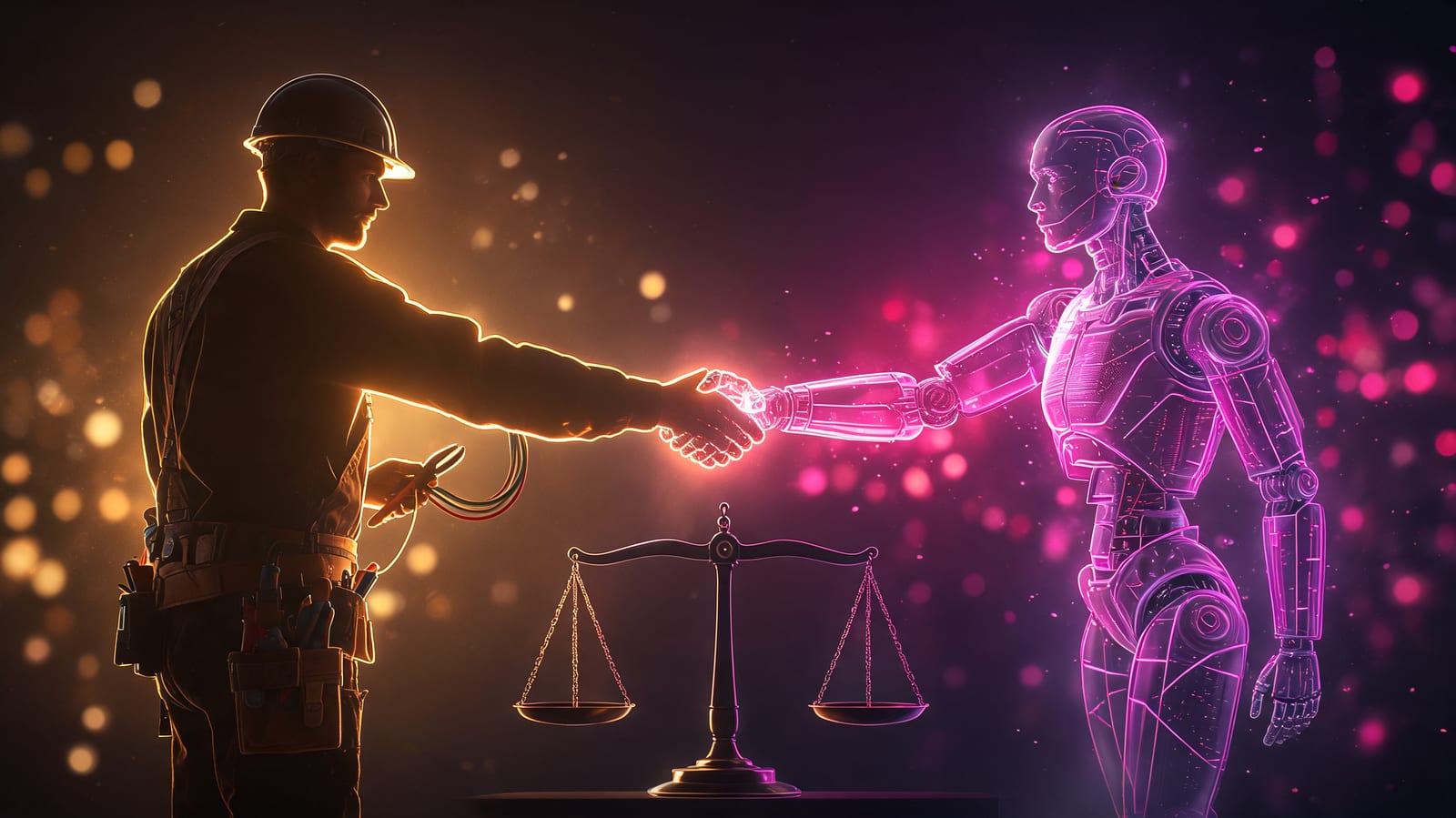
The jobs most likely to survive AI are the ones built on physical skill in unpredictable environments, human trust and accountability, or judgment calls over ambiguous situations — think skilled trades (electricians, plumbers), hands-on healthcare (nurses, surgeons, therapists), and roles where a human must own the decision (judges, executives, crisis leaders). If you want a "top 3," the safest picks are skilled trades, hands-on medicine, and human-trust professions. The jobs most exposed are the opposite profile: repetitive, screen-based, and easily specified — data entry, basic bookkeeping, routine copywriting, first-line support.
That's the direct answer. The more useful one is understanding why those categories survive, because the pattern tells you what to do about your own job — including if, like many of our readers, you work in SEO or marketing.
The three traits that make a job AI-resistant
1. Physical work in messy reality. AI lives in software; a burst pipe does not. Trades, construction, emergency services, and hands-on care require navigating physical environments that are different every time. Robotics is decades behind language models here — a chatbot can pass an exam years before a robot can rewire a 1960s house.
2. Trust, accountability, and the human premium. Some roles exist partly because a human holds them. People want a human judge, a human surgeon accountable for the operation, a human therapist who has actually felt something. Even where AI performs the analysis, someone must own the consequences — and society is very far from delegating that.
3. Judgment over ambiguity. When the inputs are incomplete and the stakes are real — negotiating a deal, leading a team through a crisis, deciding strategy with contradictory data — the job is defining the problem, not executing a defined one. AI is a phenomenal executor and a mediocre owner of open-ended responsibility.
The lists people actually ask for
Three jobs that will survive AI: skilled trades, hands-on healthcare, human-trust professions (law, leadership, therapy).
Five jobs that will survive: add creative strategists who direct AI rather than compete with it, and AI/robotics engineers themselves.
Jobs that will always need humans: anything where the human is the product — caregiving, counseling, teaching young children, live performance, leadership.
Jobs most at risk by 2030: data entry, routine bookkeeping, telemarketing, basic translation, template-based writing, first-line customer support, simple paralegal work. Note the pattern — these aren't "low-skill" jobs, they're fully specifiable ones. If a task can be completely described in an instruction document, it can increasingly be done by a model.
The honest caveat: every past automation wave produced more jobs than it destroyed, just different ones. Nobody in 2005 predicted "app developer" as a mass profession. The 2030s equivalent roles are likely being invented right now, largely in directing and verifying AI output.
So is SEO on the endangered list?
This is where the question gets personal for anyone reading a site like this one. Routine SEO tasks — churning out generic articles, mechanical meta-tag optimization — are exactly the fully-specifiable work AI eats first. But SEO as a discipline is following the survivor pattern, not the extinction pattern: it's shifting from execution to judgment. Someone still has to decide what's worth ranking for, whether the AI-drafted page is actually true and useful, and how to build the authority signals that separate a trusted site from the flood of generated content. We've covered the full argument in is SEO dead or evolving in 2026, and the short version is: the practitioners being replaced are the ones doing work indistinguishable from a model's output.
There's an irony worth sitting with: as AI makes content infinitely cheap to produce, the signals AI can't fake get more valuable. Anyone can generate 10,000 words a day now. What a model can't generate is another real site owner deciding your site is worth linking to. That's why backlinks — real, editorial, verified ones — have gained relative weight as content has commoditized. It's the same human-trust premium that protects the surviving jobs, applied to websites: do backlinks still matter in 2026 walks through the evidence.
That logic is exactly what Backlinkster is built on: 1-for-1 in-content link exchanges between real site owners, verified live by code. A human on the other end choosing to link to you is precisely the kind of signal that survives the AI content flood — because it can't be prompted into existence.
What to do, whatever your job is
The pattern across every surviving category suggests three moves:
- Climb from execution to judgment. Be the person who decides what and whether, not just how. AI compresses the value of "how."
- Direct the tools instead of racing them. In marketing, that means using AI for drafts and analysis while you own strategy, taste, and verification — which AI is best for SEO compares the current options.
- Invest in what can't be generated. Reputation, relationships, a track record, real-world skill. For a person that's your network and portfolio; for a website it's domain authority and a genuine backlink profile.
Nobody can hand you a guaranteed list of safe jobs — anyone who claims otherwise is guessing with confidence. But the traits are stable even where the specific titles aren't: messy physical reality, human trust, and judgment over ambiguity. Move your work toward any of the three and you're on the right side of the wave.
Related: Is SEO dead or evolving in 2026? · What is replacing SEO? · Which AI is best for SEO?